
Data Science
Start a structured data investigation without starting from a blank notebook.
Connect a supported database, profile its schemas and tables, inspect quality and relationship signals, and move from a macro scan into guided analysis with reusable evidence.
Workflow
How the feature works
Select a database
Start from a connected PostgreSQL, MySQL, or compatible database source.
Profile the source
Review schemas, tables, columns, sampled nulls, row estimates, and quality.
Follow the signals
Inspect relationship candidates and guided Level 2 and Level 3 questions.
Keep the evidence
Append analysis cells and use supporting charts and tables in the workspace.
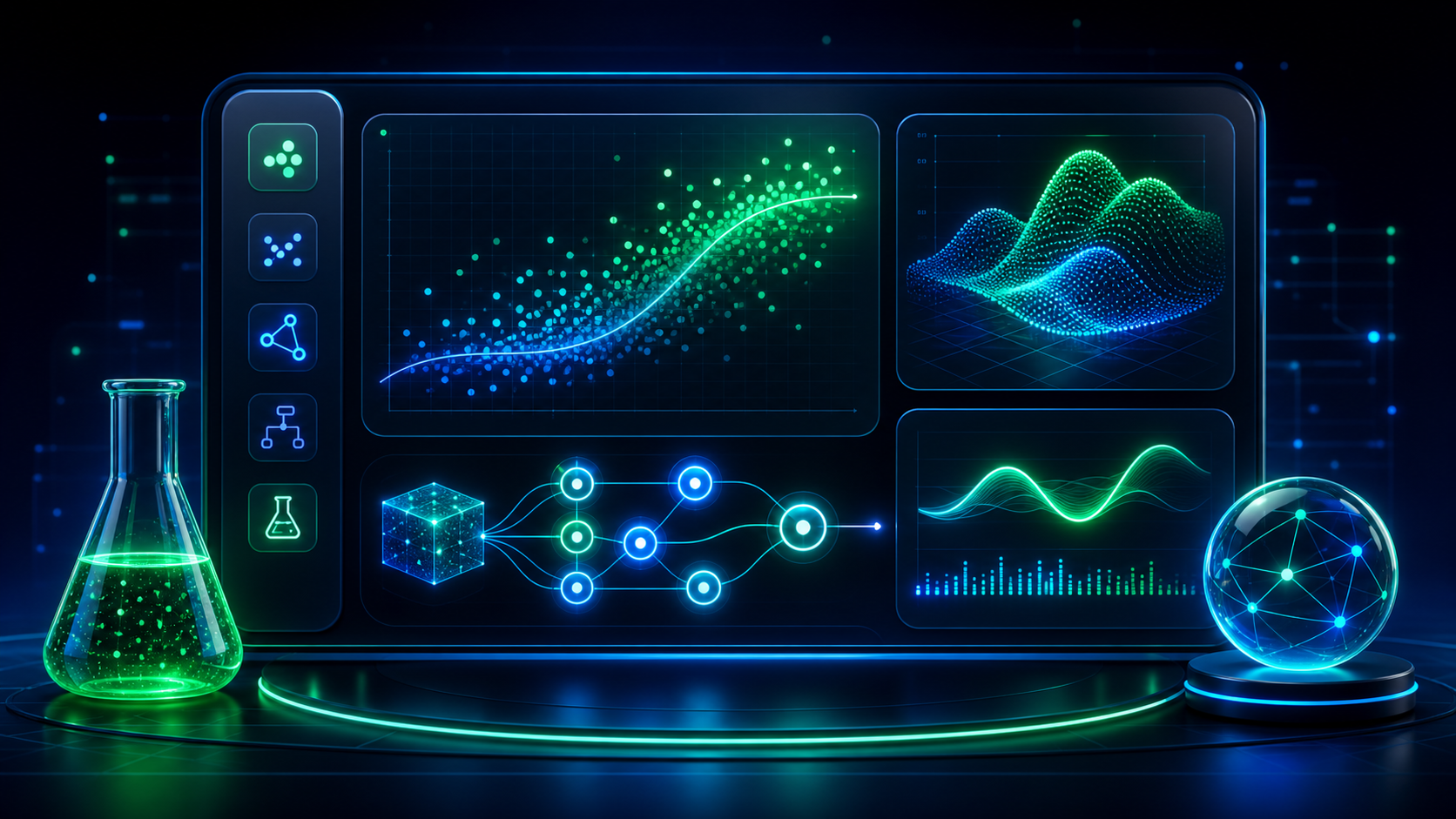
Macro scan
Understand the source before asking narrow questions
A new exploration begins with a Level 1 investigation of the connected source. DataUnmess profiles the shape of the database so the next question starts with real table, column, row, and quality context.
Guided investigation
Move from broad structure to business drivers
The workspace proposes deeper questions based on what the profile found. Each answer can append another notebook-style cell, keeping the investigation readable instead of replacing the previous result.
Use SQL-backed evidence for source inspection and Python-ready analysis when the question requires deeper statistical or exploratory work.
Outputs
Keep analysis connected to the rest of the workspace
The same connected data can support investigation, dashboard cards, and prepared pipeline outputs. This makes it easier to turn a finding into a monitored KPI or a reusable cleaned dataset.
Example prompts
Ask for the outcome in business language
Profile this database and show me the strongest data quality and join signals.
Investigate which customer segments explain the recent revenue decline.
Compare retention by acquisition channel and identify where sample size is too small for a confident conclusion.
FAQ
Data Science questions
Does Data Science start by profiling the database?
Yes. The workspace begins with schemas, tables, columns, row estimates, sampled quality signals, and relationship candidates before deeper analysis.
Can I keep extending an investigation?
Yes. Guided next questions append notebook-style cells so the evidence and progression remain visible.
Can findings become dashboards or prepared datasets?
Yes. Use the same sources to build dashboard cards, or create a Data Pipeline when the analysis reveals reusable preparation work.
Continue exploring